Loving the Alien

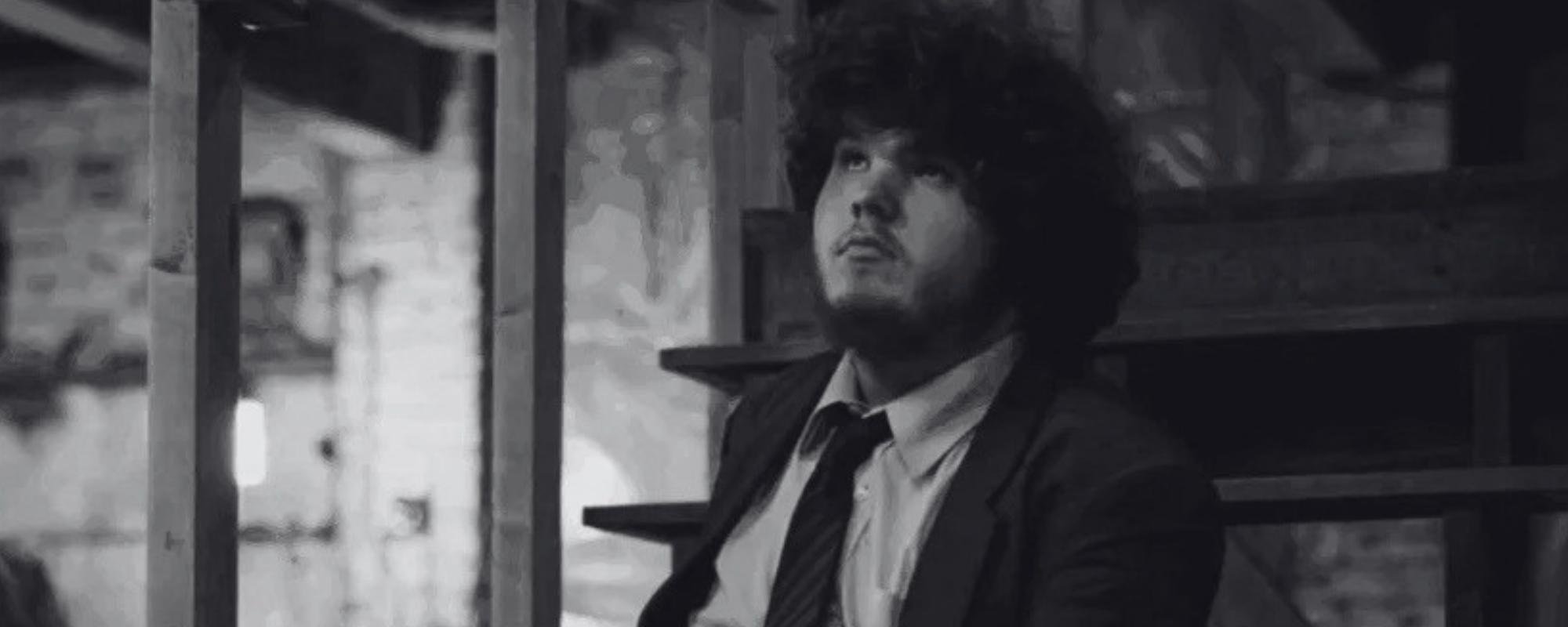
On Aidan Delbis in Bugonia.
Content warning: for sensitive subjects regarding disability and mental health.
Spoilers for Bugonia ahead. I spoil the whole thing, actually.
Yorgos Lanthimos loves an outsider. When we meet his characters, they are usually enduring some form of isolation; frustrated by social constraints and stigmas, or harbouring a desire for independence in the pursuit of truth and knowledge, no matter how painful or ugly. Emotionally frank, yet socially awkward, longing for freedom of choice, freedom of language, in voices that are inherently neurodivergent. His most recent film goes a step further by placing an autistic character at the centre of the drama, and though it's perhaps the most represented I have ever felt on screen, the industry is still taking the tiniest of baby steps – a reluctant, wincing shuffle with some prolonged, inexplicable pauses – towards sufficient disability representation.
In Bugonia (2025), Jesse Plemons and Aidan Delbis play cousins Teddy and Don, who, at the beginning of the film, perform a clumsy kidnapping operation on Michelle (Emma Stone), the CEO of a pharmaceutical company Teddy holds responsible for putting his mother Sandy (Alicia Silverstone) in a coma. Teddy, a staunch conspiracy theorist, believes Michelle is an 'Andromedan' alien in disguise, using her corporate influence to destroy the Earth. Don isn't so sure, but goes along with Teddy's plan, partly out of love, but mostly because he has no real choice. Don is autistic, and has no access to any external support. His parents aren't around. Teddy is all he has and though he's skeptical, he's still holding onto some hope that his cousin knows what he's doing. Conversely, Don is Teddy's only means of support. It’s a co-dependency born out of necessity and something we don't always talk about; how people who are usually considered "dependent" also have people dependent on them.
Ten minutes into the film, I had to pause and Google Delbis, as I always do when I see someone display traits of developmental disability on screen, lest I find out it's some hack pulling a Maddy Ziegler. But no, not this time. It's a relief. A glimmer of hope in an industry that ties itself in knots trying to justify their reluctance to cast disabled actors. Turns out it's not so hard.
Casting director, Jennifer Vinditti, was clearly apprehensive at the idea of finding a neurodivergent actor to play Don, despite making a documentary that explores the subject back in 2007. She was cautious, not because she was adverse to the idea, but because she didn't want to cause harm:
Yorgos always knew he wanted the role of Jesse’s cousin to be played by someone neurodivergent, and I’ve worked with that community before... After reading the script, I knew it would be a challenge, because you don’t want to put someone (who is on the spectrum) in a situation that might traumatize them.
Therein lies some of the fear. That we're made of glass. Anyone remotely familiar with autistic distress will know that over-stimulation, a change in routine, having to adapt to an unfamiliar social dynamic, is an intensely painful experience. And those experiences stack, leaving a large number of us with several co-occurring conditions, including Complex Post-Traumatic Stress Disorder (CPTSD). But like anyone, we don't know how we're going to react to every hypothetical scenario. Humans are, by their very nature, unpredictable. So is Dennis Quaid, David O. Russell, Shia LeBeouf, Russell Crowe and all the other on-set live-wires than never seem to be out of work. This anxiety over how to communicate with or accommodate a disabled actor is just another form of exclusion born from an inherent aversion to difference; the fear of "traumatising" comes from a fear of liability and general discomfort. It's about their needs, not ours. A threat of violence from an entitled A-lister is much more palatable than say, an unknown autistic actor getting anxious over a bright light.
I suspect Vinditti's championing of Delbis was, in part, an exercise in redemption, considering she was also the casting director on Good Time (2017), a film in which co-director Benny Safdie plays a neurodivergent man caught up in his brother's criminal escapades. Brothers Benny and Josh Safdie said they didn't cast a disabled actor in the role alongside Robert Pattinson, because the fast-moving and intense conditions on set would "not be fair" on them. The Safdies are known for street casting non-professional actors and taking a risk with some temperamental individuals. Timothée Chalamet said in a recent interview that while on set of Josh's latest, Marty Supreme, he was threatened with violence by a man who claimed to have served a 30 year prison sentence. One would think this vérité style of casting, if fairly regulated, would have the potential to be inclusive; to cast the kind of personalities we rarely see on screen. Especially considering the Safdies appear to be so keen on authenticity. However, at the time of release, the brothers told NPR they wanted the action scenes in Good Time to feel "real" and "dangerous", so casting an actor with a disability was a risk they weren't willing to take.
Josh Safdie: We were looking into casting actors with real disabilities and we were very far along in that process and we were interviewing a lot of people ... but we ended up ... looking at our schedule, which was very aggressive, and a lot of scenes that called for intricate blocking and action set pieces — because this is, in the end, an action movie ... we realized that [the actor] wouldn't have much agency in those scenes, we'd be pushing them around and manipulating, and that morally crossed a line for us.
Benny Safdie: The last thing we wanted to do was have that character be taken advantage of from behind the camera.
Rich, considering the news that started circulating earlier this year during the Oscar campaign for Marty Supreme, alleging that a 17 year old girl was cast in Good Time as a sex worker and pushed into doing a nude scene and having simulated sex with Buddy Durress, a non-professional actor in his 30s, also with a criminal record, who (allegedly) exposed himself to the girl and propositioned her. Some claim Josh Safdie, who was on set at the time, wasn’t aware of the girl’s age, some claim he was, and that this was the cause of a rift in the brother’s working relationship.
Regardless of the truth, what kind of message does this send to aspiring disabled actors? That they aren’t capable of understanding direction? That they are more of a liability than a tough old jailbird threatening to beat up little Timmy Tim Tim? That it’s okay to deprive other cast members of agency, but doing so to a disabled actor would be bad optics? Worse than a lack of background checks and the (alleged) sexual assault of a minor? Of course, these would be egregious double standards if that were the case, but the truth is they simply didn’t want to.
This quote from Chalamet is telling:
[on Marty Supreme] there are a lot of non-actors…that I find it really thrilling to work with, but sometimes it would take multiple takes to really get something out of them.”
That's precisely what they're saying about disabled actors behind closed doors. It's a lazy, narrow-minded assumption that disabled people, regardless of their level of skill and support needs, can not contribute anything of substance. Getting them to improvise is like getting blood from a stone, head empty, no one home. I heard this over and over again in my past work on "inclusive theatre" productions. I once devised a script entirely from workshopped improvisation. I sat down in front of the stage with my laptop and typed frantically as the actors churned out some brilliant stuff. When I passed the script on to the director, most of it was scrapped (“too weird”) sanitised ("no swearing") and drained of any substance. She said the cast wouldn’t be able to enunciate words that came from their own mouths. The youngest cast member was 17. The oldest was pushing 80. That's just scratching the surface of the things I've witnessed in disability arts programs. Infantilisation, censorship, a lack of personal and creative agency. But that's a story for another time. It's hard not to take this personally; far too easy to lament past injustices. But this is a piece about tolerance.
Aidan Delbis sent in an audition tape for Bugonia after Lanthimos put out an open casting call seeking an unknown, neurodivergent actor. He landed the role right before his 18th birthday. He said he was drawn to the script because it is a comment on intolerance and reflects his own struggles. This is immediately evident from the scene at the beginning of the film where Michelle is at work, filming a promotional video, disingenuously pushing for "diversity" in her company, constantly fumbling her take, her frustration with having to even address the topic apt considering not only the lies of big business when it comes to equal opportunity employment, but the empty promises made to disabled people that there is room for them in the arts. So much so that Bugonia feels like a response to the Safdie brothers and Good Time. Both films explore how familial and/or co-dependent relationships can be damaging, especially within marginalised groups, but in the former, we are afforded the treat of not having to endure Benny Safdie's laboured and offensive imitation.
Aiden Delbis is a huge horror fan, and most would assume a non-disabled 18-year-old actor with a good handle on cinematic artifice would have no trouble with the intensity of a Lanthimos film. But still Venditti and the casting department were walking on eggshells, the cast clearly apprehensive, but it didn't seem to take them long to realise he wasn’t going to break at the very idea of simulated violence. Lanthimos says:
“We did workshops with Jesse [Plemons] and Aidan. Jesse was so incredible and so sensitive, because [his character] had to be kind of intense with him at times. He really wanted to ake sure we found the right person. We wanted it to be the right fit for someone and make sure that the environment wouldn’t be shocking to them and that they could handle it. We did a day of workshop improvisation lines and they just had like instant chemistry. Jesse was always tiptoeing, like, ‘Are you sure?’ and Aidan’s like, ‘I’m fine.’”
During one Q&A while promoting the film, Delbis turns to Stone and wryly asks her if she "wasn't too traumatised" by having to perform the scene where Teddy tortures Michelle in an electric chair. There's something knowing about the way he says it, like it had become an inside joke. Like he was tired of being asked the question himself.
Lanthimos, Stone and Plemons, for the most part, speak of Delbis as they would any other colleague. They are not patronising; don't treat him like a diversity hire, but most importantly, Don's autism has a place in the narrative. It doesn't feel thrown in for the sake of diversity or novelty, and the lead performances are, as Stone says, "a three-hander" in which the interactions between her character, Michelle, Don and Plemons' Teddy are all equally important. Don, however, is the lynchpin of the narrative. The character with the most insight into the absurdity and hopelessness of the situation.
Don is the grounding presence, the voice of reason and empathy, but not in the way some might think. Many reviewers have pointed out that Don has 'innocence' and brings a 'humanity' to the film that allows him to see through Teddy's delusions and Michelle's deception, that he is a calming presence amongst the chaos. The word 'pure' has been tossed around a lot. Delbis himself says there is a "purity" to Don, but he means in the sense that he is not corrupted by ideology. His motivations are clear. Don is dependent on people whose ideals and desires do not match his own and can see no way out. Teddy is part of the problem, oblivious to the pressure he puts on Don to comply with his every whim. Whenever he sees Teddy in distress, Don will apologise, to which Teddy will always tell him firmly and affectionately to stop saying sorry, that nothing is his fault, that's he smart and strong, before cutting him down again; telling him he's not allowed to speak in front of Michelle in case he messes everything up. It's a brutal cycle for autistics. We’re blamed for so much; for our behaviour, the way we stand out, for emotions beyond our control. "I'm sorry," becomes an automated response. Teddy will be talking about a problem that has nothing to do with Don and even then, Don will still apologise even as his autonomy is being stripped.
Early in the film, Teddy has Don and himself chemically castrated, supposedly to guard them from any "distractions" their Andromedan captor might throw at them. Don is upset that he won't be able to masturbate anymore, later mentioning that he would one day like to “be with someone”. One of the biggest injustices facing disabled people is the lack of bodily autonomy when it comes to relationships, sex and reproduction. Couples who want to get married and start a family are denied the opportunity. Hysterectomies and vasectomies are performed without knowledge or consent. Women are fitted with IUDs at their parent's behest. I once heard a mother bemoan the fact that her daughter kept managing to pull hers out. She wondered how she even managed, assuming she knew nothing of her own body. Again this assumption of innocence. This was a grown woman. She knew what she was doing. Don isn't innocent either. He knows how his bits work. He just misses jacking off, damn it.
Don's lack of agency leaves him stuck between a rock and a hard place. Teddy is the 'rock'–stubborn, obsessive, committed to his ideology and Michelle is the 'hard place'—enigmatic, manipulative and (possibly) deceitful. That leaves the man in the middle. And something's got to give. Don is not a buffer or a balm. He's the biggest pressure cooker of the trio and the first to explode. After several nights of prolonged interrogation, Teddy allows Michelle out of her basement prison, inviting her to have dinner with them. During the meal she attempts to escape, and a violent scuffle ensues. She ends up back in the basement, unconscious, when a police officer knocks on the door. Teddy takes care of it while Don sits on the stairs, pointing a shotgun at Michelle, who comes to and takes the opportunity to try and convince him to let her go, espousing so many empty promises that he would very much like to believe. She promises him a better life, even if Teddy goes to prison. “If you were an alien, would you take me with you?” he asks. Michelle says she would, while firmly maintaining she is not an alien. He smiles, thanks her, points the gun under his chin and pulls the trigger. The world has made him feel like an indelible error. Delete.
Statistics vary, but several studies indicate that around 66% of autistic adults have contemplated suicide. It's one of the leading causes of death within the community. We're told we're flawed and in a world that does not accommodate us, it's no wonder so many lose hope. In fact, when Michelle is revealed to be an Andromedan, she explains to Teddy that her kind created humans, that there had been several instances in the past where they'd had to kill everyone off and try again because they didn't turn out as expected. We learn little about Teddy's mother, yet Michelle describes her as a "broken person" she was trying to fix. She tells Teddy that Andromedans have been, since time immemorial, trying to save humans, their "flawed" creations from corruption, war, cruelty and sickness. To fix their "mistakes", no matter the cost. Andromedans: The Original Eugenicists.
Back to the start: Michelle drives to work in high spirits, singing along to Chappell Roan's 'Good Luck, Babe': "You have to stop the world just to stop the feeling..." And, in the end, she does exactly that. To ease the guilt, she returns to her mothership and literally bursts a bubble over a map of the Earth, killing everyone instantly, a look of equal remorse and relief on her face. Don, too, stopped the world to stop the feeling. When he put that shotgun under his chin and blew his brains out, Michelle's “flawed” creation literally exploded in her face. In a similar fashion, Teddy has a mishap with some home made explosives which sends his severed head flying across the room, knocking her unconscious.
“The world has not always been kind or open-minded towards neurodivergent people,” Delbis says. Cinema has always championed the outsider, the eccentric, but watching us (or pale imitations of) is one thing, including us is another. Although he says he's not sure yet if he wants to make a career out of acting, Delbis can next be seen in what he describes as a "small role" in the upcoming indie film, My Movie Starring Paul Dano. I couldn't spot him in the trailer. There was a person in a bear suit. I hope it isn't him, but a familiar nagging in the pit of my stomach is giving me pause.